
I Keep Reviewing HSK Vocabulary, but Why Do I Still Forget It in the Exam?
 415
 11/13/2026
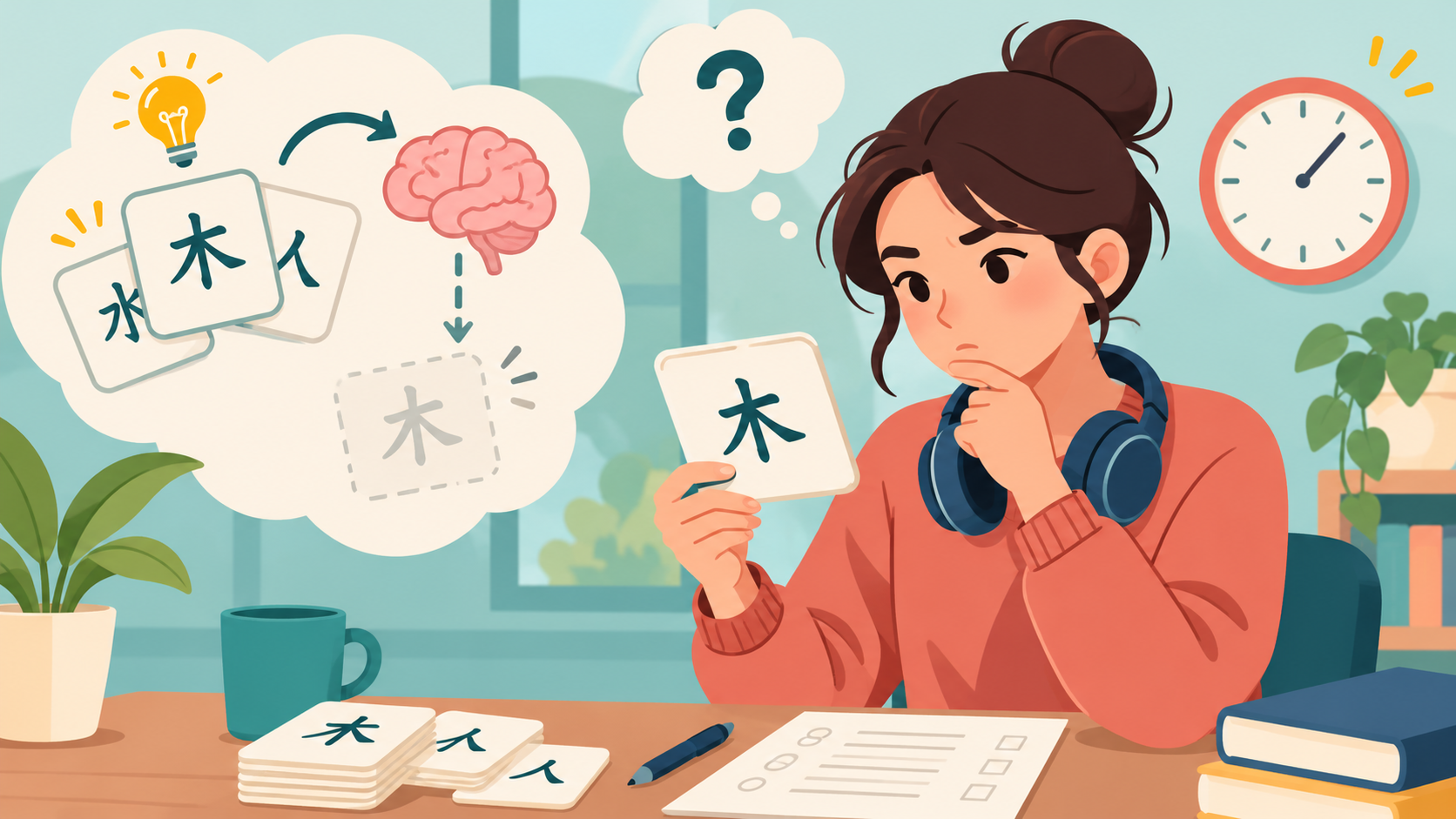
You have reviewed the same HSK vocabulary list several times. The words look familiar, but during a mock test you cannot remember what they mean—or you recognize them but still choose the wrong answer. It is easy to worry that your memory is poor or that all that study time was wasted.
Before starting the whole list again, check what your review is training. Reading a word and recognizing it is different from recalling it when a question gives you no answer to look at.
Recognizing a word is not the same as recalling it
When you study a list, the characters and definitions are right in front of you. A test may give you only a sentence, and you have to retrieve the word yourself. Re-reading can make a word feel familiar without making it easy to recall.
For example, you may know what 决定 (juédìng, “to decide”) means, but still get stuck here: “我们已经____了周末去爬山。”
If you could not recall 决定, that does not mean you never learned it. It means you need more practice retrieving it from context.
Try covering the word and filling in the blank, or cover the definition and explain the word from memory. Check your answer only after you have tried. If you often think, “I have seen this word, but I cannot choose confidently,” try HSK practice exercises to work with vocabulary in question contexts and use the feedback to spot weak areas.
Find the reason you missed a word
Next to each missed question, write down what went wrong: did you forget the meaning, confuse it with a similar word, or recognize the character but fail to read or write it? Similar words are easier to remember when you compare them in real sentences.
我发现门没关。 (“I noticed the door was not closed.”)
爱迪生发明了电灯。 (“Edison invented the light bulb.”)
这座城市发展得很快。 (“This city has developed quickly.”)
发现 means noticing something that already exists; 发明 means creating something new; 发展 describes growth or change. The sentence shows what each word actually does.
Keep these words in a short review list. Test yourself later that day, the next day, and again a few days later. If a word comes back easily, leave more time before the next review. If it does not, bring it back sooner.
Use the word in a sentence of your own
Knowing a definition does not always tell you how a word fits into a sentence. For 影响 (yǐngxiǎng, “to affect”), you could write:
睡得太晚会影响第二天的学习。 (“Staying up too late can affect my studies the next day.”)
Then try a sentence about your own life and check whether the meaning and word pairing sound right. If you often recognize a word but cannot use it clearly in writing, HSK AI Writing Assessment can give you feedback on vocabulary, grammar, and expression.
A practical 10-minute review
Choose five to ten words you keep forgetting. First, cover the answers and recall each word from a definition or sentence. Next, mark the reason for each mistake and compare any confusing words. Finally, write one short sentence with a few of the words.
For example, review 决定, 发现, and 影响 today. Test those words again tomorrow before adding new ones. This keeps your attention on words you have not mastered instead of sending you back to the entire list.
Forgetting a word during a test does not erase the work you have already done. It shows you what to practise next: recalling the word without a prompt and using it in context.


