
My HSK Mock Test Scores Keep Changing—Which Score Should I Trust?
 271
 11/11/2026
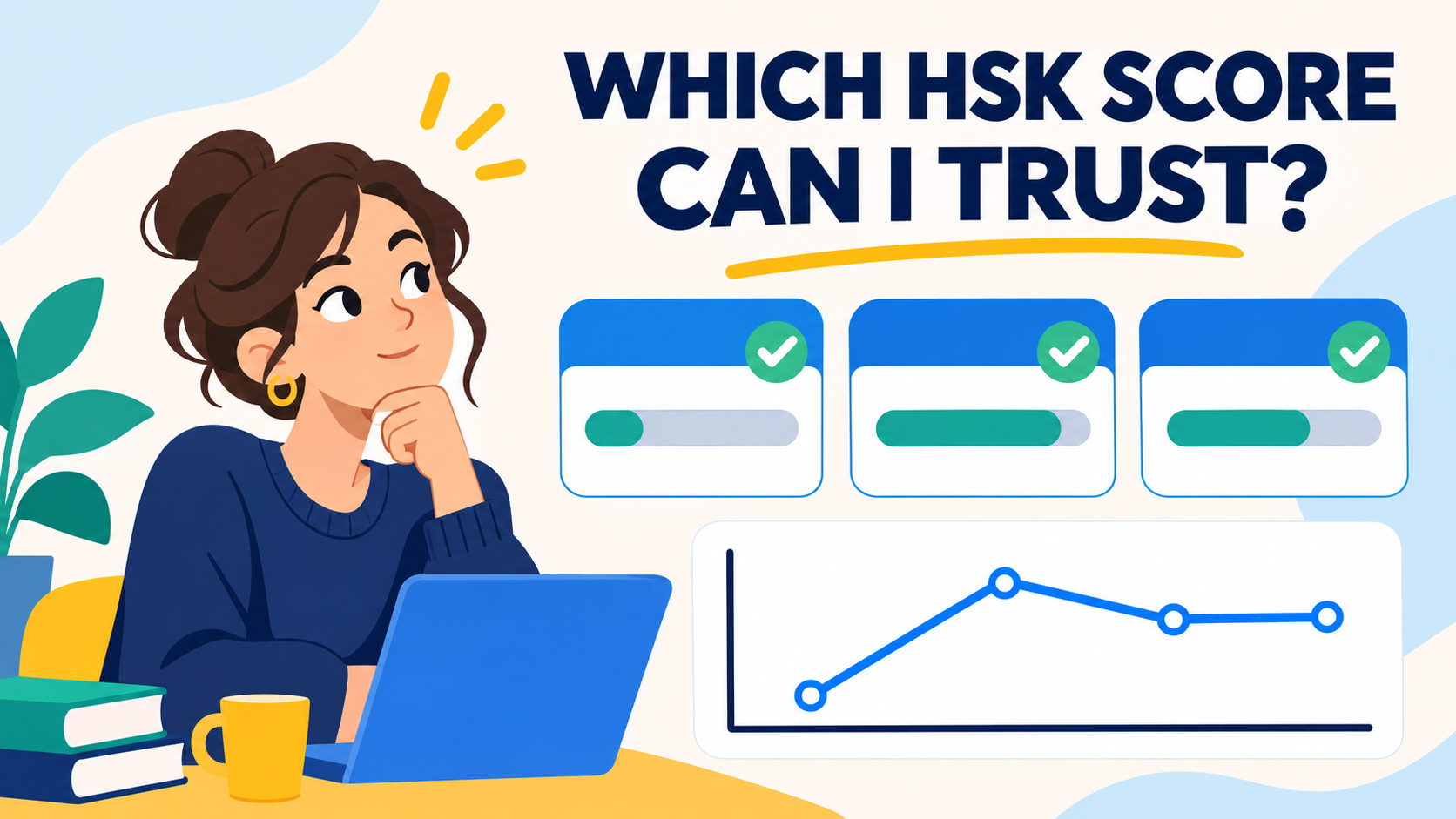
A high mock-test score can make you feel ready for the HSK. A low score two days later can make you wonder whether the first result was luck. If your university application or test date is approaching, that uncertainty becomes stressful very quickly.
The short answer is that you should not trust your highest score or your latest score by itself. Your most useful estimate comes from a small group of tests completed under the same conditions. Look at the average, the lowest score and the stability of each section. Together, they tell you much more than one exciting result.
Why HSK mock-test scores change
Some variation is normal. Every paper has a different mix of vocabulary, topics and question types. A listening set that matches familiar subjects may feel easy, while another set exposes weak sound recognition. A reading paper with several long passages may punish slow decision-making even when your vocabulary is strong.
Your condition also matters. Sleep, noise, interruptions, test time and even whether you paused the audio can change the result. A test completed casually on a phone is not comparable with a timed test taken at a desk.
There is another common cause: reviewing answers between tests without correcting the underlying skill. You may recognize similar questions for a few days and score higher, but the improvement disappears when the wording changes. That is short-term familiarity, not stable mastery.
Which score should you trust?
Use three complete mock tests taken within seven to ten days. Keep the level, time limit, device and environment as consistent as possible. Do not pause the listening audio, look up words or check answers before the test ends.
Then examine three numbers.
First, calculate the average. This is a better estimate of your current level than one unusually high or low result.
Second, check the lowest score. The lowest result shows what may happen on a difficult day. If it is far below your target, you still have a risk that needs attention.
Third, compare the section scores. A stable total can hide an unstable skill. For example, reading may compensate for listening in one paper, while listening compensates for reading in another. That pattern means the total is less reliable than it appears.
A simple readiness rule
You are probably approaching exam readiness when all three tests meet your required target, the difference between the highest and lowest total is becoming smaller, and no section repeatedly collapses under time pressure.
If only the best score reaches the target, treat it as evidence of potential, not proof of readiness. If the average reaches the target but the lowest score does not, you may be close, but you need a safety margin. If all three scores are similar but too low, the problem is not inconsistency. You need focused improvement before taking another full test.
What to do when the scores are far apart
Do not immediately take five more mock tests. First, label the reason for each lost point. Use categories such as unknown vocabulary, misunderstood audio, missed logic word, slow reading, careless choice and time pressure. After two or three papers, repeated causes become visible.
Choose the largest repeated weakness and spend several days on targeted practice. If listening falls sharply, practise one-play audio and review the exact sounds you missed. If reading varies, work on evidence, distractors and timing. If writing is unstable, compare your sentences with specific feedback instead of only memorizing model answers.
Then take one new full mock test under the same conditions. The goal is not merely to raise the score. The goal is to reduce the gap between a good day and a bad day.
How HSKTest.AI can help
HSKTest.AI lets you take timed HSK mock tests and review performance by skill. Instead of keeping only a final number, you can use the results to identify recurring weak areas and select the next practice task accordingly. This makes each mock test part of a diagnosis-and-improvement cycle rather than another score to worry about.
Before making an exam or application decision, remember this: your highest score shows what you can do, your lowest score shows your risk, and your average shows where you are now. Trust the pattern, not a single number.


